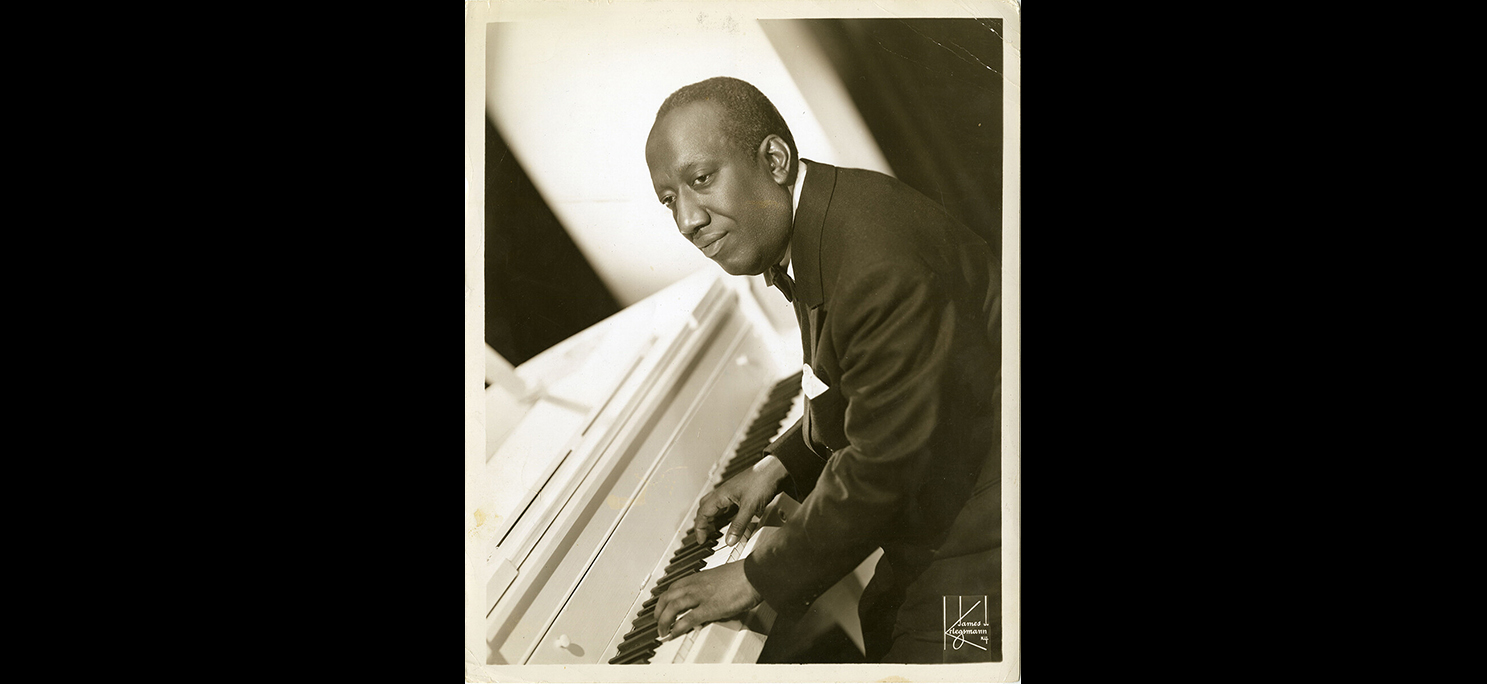
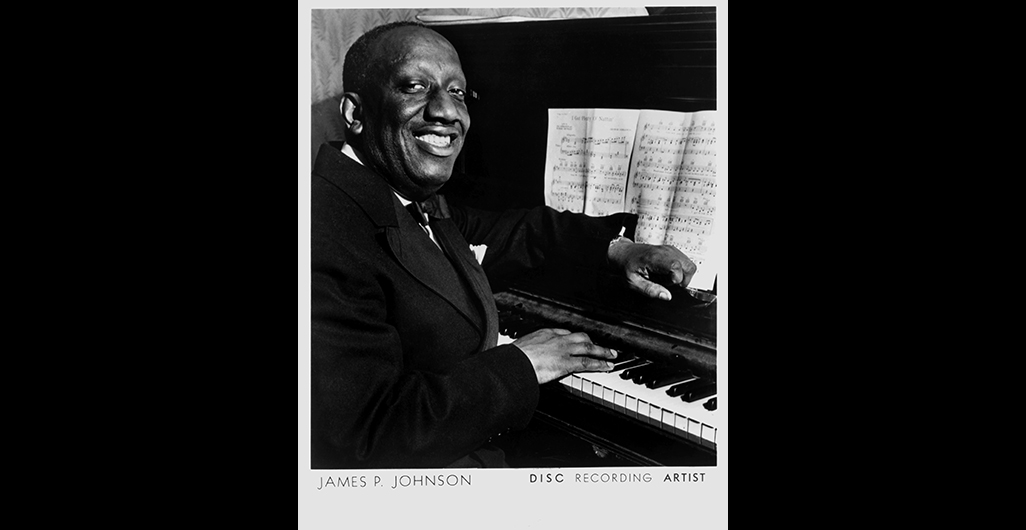
James P. Johnson, 1945
Photo: James J. Kriegsmann
Deep Like the Rivers: The Musical Flows of James P. Johnson
July 27, 2026
by Mark Burford
Appearing in the June 1921 issue of The Crisis, the New York–based NAACP magazine edited by W. E. B. Du Bois, “The Negro Speaks of Rivers” was 20-year-old Langston Hughes’s first published poem. Hughes’s speaker is the voice of African American experience, which recounts mighty rivers—the Euphrates, the Congo, the Nile, the Mississippi—alongside which Black civilizations, ancient and modern, have flourished. “My soul has grown deep like the rivers,” the poem solemnly intones. The previous month, also in New York, 27-year-old pianist James P. Johnson cut a piano roll of his composition “Carolina Shout.” He recorded the number again in October, this time for OKeh Records. For a host of pianists in the 1920s and beyond, from Duke Ellington to Bud Powell, the technical demands, rhythmic ingenuity, and sheer creativity of Johnson’s electric performances of his still-unpublished piece seemed to raise the bar set by ragtime music of the previous decade, and “Carolina Shout” immediately became a touchstone, an object of study that tested a player’s chops and captured the imagination.
The juxtaposition of these two domains of Black art-making in Manhattan in 1921—the literary center of gravity associated with the Harlem Renaissance and the after-hours musical virtuosity of Harlem piano—resonates with Hughes’s metaphor of the multiple tributaries that constitute Black history, Black life, and the Renaissance itself. It may also suggest an apt way to fully fathom the expansive artistry of Johnson (1894–1955), who navigated the diverse musical currents of his day—pop, ragtime, blues, jazz, classical, and southern African American traditions—over the course of a career that encompassed far more than Johnson’s conventional reputation as a “stride pianist.”
James Price Johnson’s youth in New York was multi-sited, with each locale adding to his musical vocabulary. He was born in New Brunswick, New Jersey on February 1, 1894, the youngest of five children, and he was first exposed to the piano through the instrument in his family home. His father William Johnson was a New Jersey native, but his mother Josephine migrated from Petersburg, Virginia in the 1870s. New Brunswick was an attractive destination for women migrants like Josephine because of readily available domestic work. As a result, there was a local community of Black southerners who would often congregate at the Johnson home for all-night parties that included dances brought directly from southern plantations. James would watch from the top of the stairs as the adults reveled in square dances, ballroom figures, and the ring shout, the West African–derived circle dance accompanied by call-and-response singing that musicologist Samuel Floyd Jr. has called the “master trope” of African American performance practice. Johnson clung to his memories of these southern folkways and referenced them in music ranging from “Carolina Shout,” which some have called the first recorded jazz piano solo, to his later extended concert work Yamekraw, inspired by an African American Gullah settlement near Savannah, Georgia. In 1943, Johnson recorded the propulsive “Carolina Balmoral,” which he described as a “country tune” animated by “the most spirited dance of the South.” He proudly claimed that the composition and performance demonstrated “a strong feeling for these dances that goes a way back—and I haven’t found anyone else with it yet.”
In interviews, Johnson credited the many musicians who impacted him in various ways. In 1902, when James was eight years old, the Johnsons relocated to Jersey City, where he remembered there being “more good ragtime players … in those days than any other place in the United States.” These included George Perry, French-Creole Floyd Keppard, and especially Claude Crews, from whom he learned the skill of being able to play a song in any key, a prerequisite for accompanying singers. Still, though he heard and dabbled in ragtime in Jersey City, Johnson confessed that his true education in the music began when his family moved to San Juan Hill in 1908. “Most East Coast playing was based on cotillion dance tunes, stomps, drags, and set dances,” and as late as 1912, when as a high schooler he landed a summer job at a small, rough-and-tumble beachfront club in Far Rockaway, he was still playing what he characterized as “popular stuff,” a mix of Irving Berlin tunes, sentimental songs, and hit rags by Joplin that “everybody knew.” At this point in his career, ragtime was more a feel—“popular songs with a strong sense of rhythm and with syncopated vamps”—than a style of composition. He was eventually introduced to “real ragtime” by his New York friend Charley Cherry, whose performances he copied note-for-note. Another transformative mentor was Black songwriter Will Farrell, who “showed me how to set my pieces down in writing.”
A particularly notable musical influence was the petite but potent pianist Alberta Simmons. Born in Virginia in 1892, Simmons made a modest living playing gigs in Manhattan, Queens, and, when opportunities arose, out of town. The historic Clef Club, founded by bandleader James Reese Europe on West 53rd Street, was a labor union and booking agency for an impressive roster of Black ragtime musicians. Simmons was among those—and one of the very few women—hired to play in some of the Clef Club’s many bands. Though Simmons never recorded and is invisible in jazz history books, her influence reverberated through the many pianists who studied stride technique with her in the 1920s, learning at the upright piano in her apartment on 8th Avenue and 41st Street. Among her students were Thelonious Monk, whose family moved to San Juan Hill in 1922, and Johnson, who remembered that Simmons “was kind enough to teach me the full Joplin rags that she played so well: ‘Frog Legs,’ ‘Maple Leaf Rag,’ and the ‘Sunflower Slow Drag.’” We can hear Johnson’s dynamic interpretation of Joplin’s music in his 1941 recording of “Euphonic Sounds,” a 1904 composition transformed by Johnson’s fertile musical imagination, prodigious technique, and more modern sense of swing.
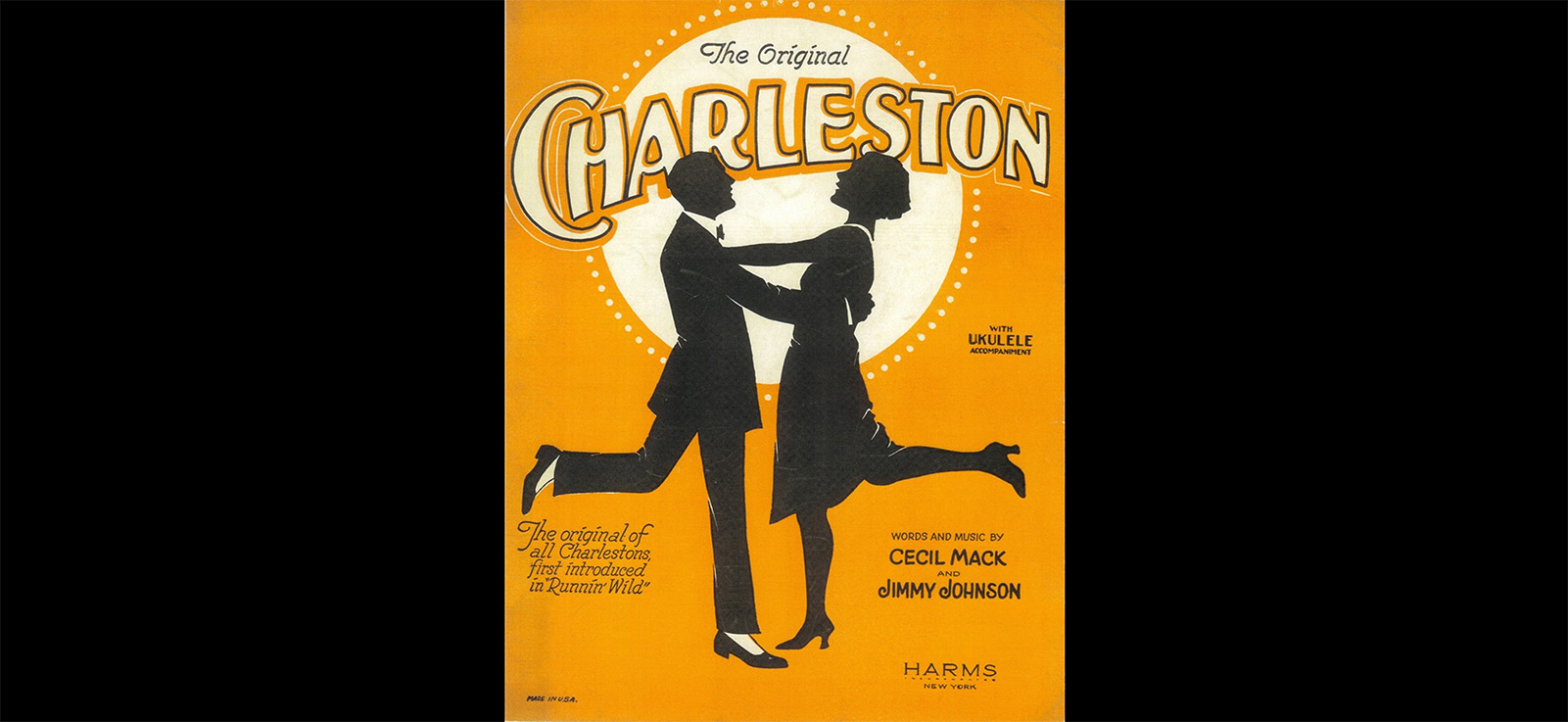
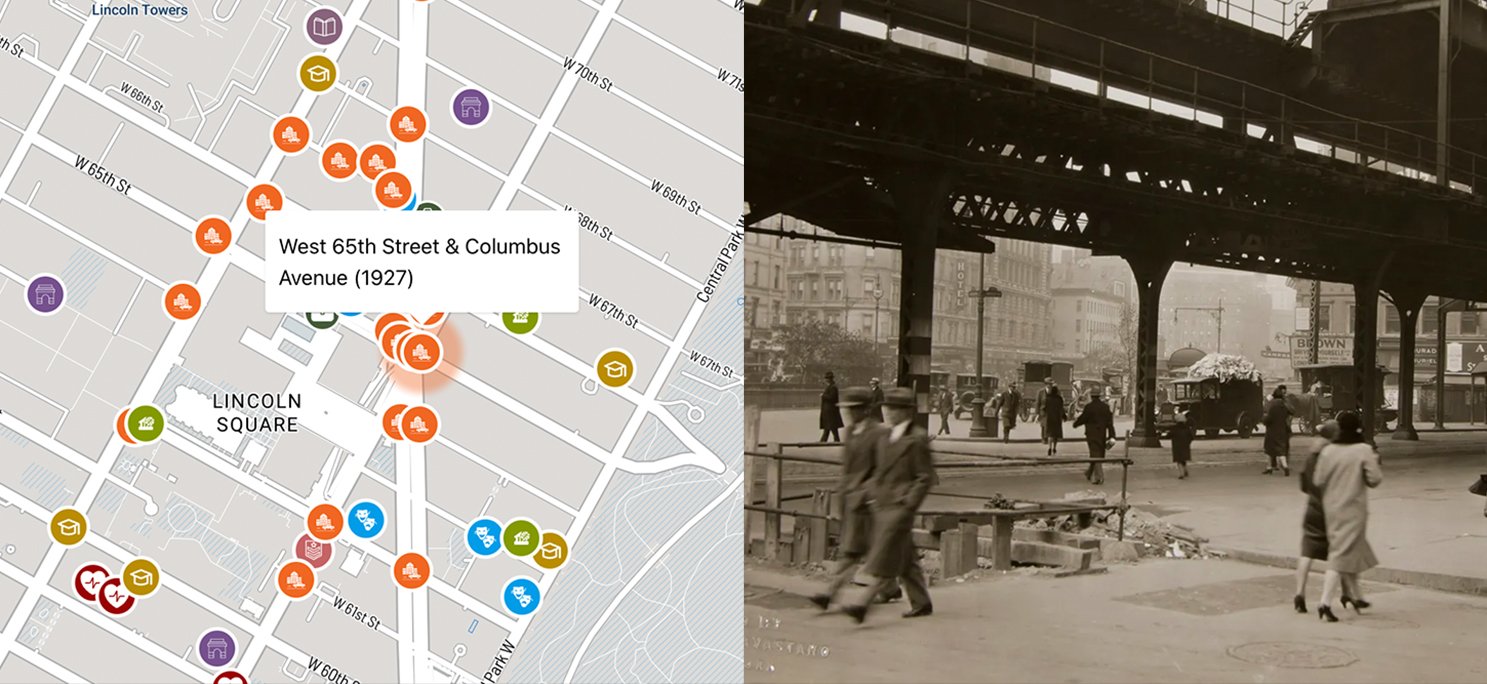
The Johnsons lived in San Juan Hill for three years. The once largely Black Manhattan neighborhood was situated just north of predominantly Irish Hell’s Kitchen. Colloquially known as “The Jungles,” San Juan Hill was home to a tight-knit community, though it could also be a tough and territorial part of town. Johnson remembered frequent “race fights with the white gangs” that could result in “two to three killings a night.” It was nonetheless home to a thriving music scene. Even after his family moved uptown to 99th Street in Harlem in 1911, Johnson continued to play in San Juan Hill clubs on 61st Street run by such proprietors as Jim Allan and Phil Watkins and especially at Drake’s Dancing Class, the underground dancehall better known as Jungles Casino, on 62nd Street. In 1913, Johnson had a weekly job at Jungles Casino, and it was here that he learned to accompany a dance from South Carolina known as the Charleston, which resulted in Johnson’s famous composition that took the nation by storm after it appeared in the 1923 all-Black musical comedy Runnin’ Wild.
Living in Manhattan, Johnson became intrigued by the professional and social world of ragtime pianists, whom he referred to as “ticklers.” As musicians, they were poorly paid, earning as little as a couple of dollars a week for hours of music each night. But most impressive to Johnson was the lofty social standing these players earned through their musical feats. “They were my heroes and led what I felt was a glamorous life,” Johnson told an interviewer, as they were always feted, fed, and well lubricated at house parties, stylishly dressed, and “welcome everywhere because of their talent.” Johnson soon earned his place in the ragtime piano scene in Harlem and in the Tenderloin (present-day Chelsea and the Garment District), becoming a peer, and to many preeminent, among such modern masters as Eubie Blake (1887–1883), Willie “The Lion” Smith (1893–1973), and, to Johnson, “the outstanding pianist in New York” Charles “Luckey” Roberts (1887–1968). Johnson also became a close mentor and a near father figure to up-and-comer Fats Waller (1904–1943). A powerful left hand, which established the bass line and alternately grounded and disrupted a listener’s sense of time, was the engine of the stride style, with the New York sound featuring technical wizardry and what Johnson described as “orchestral piano—full, round, big, widespread chords and tenths—a heavy bass moving against the right hand.” The friendly but fiercely combative musical environment and emphasis on individual style only elevated the level of the playing and Johnson didn’t hesitate to pull out the heavy artillery to stay on top: “I did double glissandos straight and backhand glissandos in sixths and double tremolos. These would run other ticklers out of the place at cutting contests. They wouldn’t play after me.”
Johnson believed that the high standard of musicianship among New York’s pianists was due not only to their competitive spirit and appetite for one-upmanship, but also to a vibrant and accessible concert music culture to which he was exposed at an early age. At Public School 69 in Brooklyn, also known as Colored School No. 3, he was a boy soprano in a school chorus that performed Joseph Haydn’s oratorio The Creation with the New York Symphony Orchestra, led by Walter Damrosch. Johnson claimed that by the age of eleven he was already regularly attending the New York Philharmonic, getting free tickets from a friend of his brother who was a waiter at a restaurant patronized by Czech conductor Josef Stransky, who took the reins of the orchestra following the death of Gustav Mahler in 1911. At these concerts, he got to know the music of “Mozart, Wagner, Von Weber, Meyerbeer, Beethoven, and Puccini” and he remembered how “the full symphonic sounds made a great impression on me.”
Meanwhile, Johnson was listening to classical recordings and observing “the European concert and salon pianists who were heard everywhere in the city at that time.” His friend Ernest Green was a classical pianist who turned him onto popular works like Gioachino Rossini’s William Tell Overture, which prompted Johnson to write a set of rag variations. Johnson composed what he described as a “Russian rag” based on Sergei Rachmaninoff’s famous Prelude in C-Sharp Minor, a piece whose dramatic descending opening motive and imposing block chords continued to be quoted by jazz musicians well into the 1950s. It was Green’s mother who told Johnson that he had “too much talent to remain ignorant of musical principles” and encouraged him to study with Italian piano and voice teacher Bruno Giannini, for whom she worked as a maid. Johnson suffered through Giannini’s “dull exercises” but was grateful to learn “a lot of concert effects.” At a time when such composers as Aaron Copland and Igor Stravinsky were drawing on popular idioms, it is safe to say that Johnson knew at least as much about classical music as his contemporaries in the concert world knew about jazz. It was this cross-stylistic fluency that, in his opinion, made New York–based ticklers the best in the country. “The people in New York were so used to hearing good piano played in concert and cafés. The ragtime player had to live up to that standard,” he reminisced in the 1950s. “They had to get orchestral effects, sound harmonies, chords and all the techniques of European concert pianists who were playing their music all over the city.” Johnson, sometimes billed as “Jimmy Johnson,” showcases this aesthetic outlook in his 1930 recording “You’ve Got to Be Modernistic.”
An occasional guest at Harlem musical gatherings was composer George Gershwin, who turned up when Johnson was playing to admire and absorb his musical ideas. “We had lots of talks about our ambitions to do great music on American themes,” Johnson recalled. Gershwin’s Rhapsody in Blue, which premiered in 1924, sparked a vogue for “symphonic jazz” and, perhaps in response, Johnson, who felt a deeply personal connection to African American musical traditions, composed Yamekraw: A Negro Rhapsody, first published in 1927 as a solo piano piece (which Johnson recorded in 1944) and subsequently arranged for orchestra by William Grant Still and performed at Carnegie Hall a year later. In the 1930s and 1940s, as new styles of jazz eclipsed ragtime and stride, Johnson increasingly explored long form works rooted in Black popular music, including his four-movement Harlem Symphony (1932) and Concerto Jazz a Mine for piano and orchestra (1934). Johnson’s hope to move into new realms as a professional musician is reflected in his relentless pursuit of credentialed musical training—studying counterpoint and modern trends, including impressionism and atonal composition—and by his twice applying for a Guggenheim Fellowship to support his ambitions as a composer. In his 1942 application, he made his case by noting the full compass of his portfolio: “I have written ‘blues,’ big ensembles, original spirituals, classic songs and seen life from the most primitive to the highest stage in America.” It is tempting to read Johnson’s aspirations in his final decades as a personal quest for artistic legitimacy, as a San Juan Hill stride pianist seeking the imprimatur of classical music, and there is likely some truth in this interpretation. But Johnson’s emphasis on all that his career encompassed also suggests that a unidirectional narrative is perhaps better understood as a story of “both/and,” as his quest to create an American music with Black vernacular traditions at the very center. Stretching “from the most primitive to the highest stage in America,” Johnson’s capacious musical life was both broad and deep, like the rivers.
Sources
Scott E. Brown, Speakeasies to Symphonies: The Jazz Genius of James P. Johnson (University Press of Mississippi, 2026).
Tom Davin, “Conversations with James P. Johnson” in Ragtime: Its History, Composers, and Music, edited by John Edward Hasse (Schirmer Books, 1985).
John Howland, Ellington Uptown: Duke Ellington, James P. Johnson, and the Birth of Concert Jazz (University of Michigan Press, 2000).
David A. Jasen and Gene Jones, Black Bottom Stomp: Eight Masters of Ragtime and Early Jazz (Routledge, 2002).